Crawdaddy Cove

Is Curt Schilling a Hall of Famer?

July 1, 2008 · No Comments

When I first heard that Schill would be out for the season because of shoulder surgery, I felt a cold shiver go down my spine. Deep down, I was expecting him to return just in time for the playoffs and play a key role - even if it meant pitching one important inning in the ALCS. Curt Schilling in the postseason is like Michael Jordan in the Finals and Tiger Woods in the Majors. Think that’s an exaggeration? Check the stats (or just trust me, he’s MONEY when the games are big — even when his body is broken).

Over the last two weeks, there have been several opinions expressed about Schilling’s case to be elected to the National Baseball Hall of Fame. My gut tells me he’s Hall-worthy, but one of the main lessons of Michael Lewis’s excellent book, Moneyball, is that you can’t always trust your gut — you’ve got to do the analysis. So, I did the analysis and now it’s obvious to me that my gut isn’t lying to me — Schilling belongs in the Hall of Fame. So, here are my rebuttals to the three most common arguments against Curt Schilling’s candidacy:

The Bert Blyleven Argument: Several writers and commentators have pointed to Bert Blyleven’s failure to garner 75% of the vote, reasoning that since Blyleven isn’t in the Hall, Schilling shouldn’t be in the Hall either. But an in-depth look at Blyleven’s career makes it clear that he, too, belongs in the Hall of Fame and that the sportswriters who vote have really blown it by not electing Blyleven. Only Nolan Ryan, Steve Carlton, Randy Johnson, and Roger Clemens have more career strikeouts, and when he retired, Blyleven was third all-time in this category. All-time! Can you imagine if the guy who’s #5 in career hits wasn’t in the Hall yet? (That’s former Red Sox star outfielder, Tris Speaker, with 3,514 hits). It would devalue the Hall to leave out Tris Speaker (who, like Schilling won three World Series, two of them with the Red Sox). Blyleven’s also top-ten all-time in career starts, and his 60 career shutouts rank 9th on the all-time list. Every other pitcher among the top-20 in shutouts is in the Hall. Why not Blyleven? Beats me. He’s 13th all-time in innings pitched (4,970) and all twelve of the pitchers ahead of him in this category are enshrined in the Hall of Fame, as well. And while he didn’t have 300 career wins (which seems to provide a ticket to the Hall), he came damn close with 287. Plus, Blyleven was excellent in the postseason too — in three postseasons, he was 5-1 with an E.R.A. of 2.47, and his teams won the World Series TWICE. Both Blyleven AND Schilling belong in the Hall of Fame. So let’s stop using Blyleven as a barrier to Schilling.
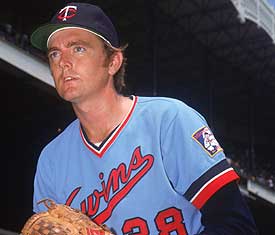
And anyway, it’s just as easy to find players whose inclusion in the Hall of Fame support Schilling’s case — Phil Rizzutto (in 13 seasons, his lifetime B.A. was .273, but he won 7 World Series with the Yankees), Ozzie Smith (.262 lifetime B.A. and 94th all-time with 2,460 hits, but won 13 Gold Gloves and played in 3 World Series, winning one of them); Tony Perez (in 23 years his lifetime B.A. was .279 and he had 2,732 hits, which places his 50th on the all-time list; but his real claim to fame is that he played in five World Series and won two of them as an integral member of the Big Red Machine). I believe that all three of these guys belong in the Hall of Fame, but none of them has a case that’s stronger than Curt Schilling’s.

I know, those are hitters and you want to compare Schilling’s career to other pitchers who are in the Hall, right? OK. Here are four great comparisons: Hal Newhouser, Jim Bunning, Don Drysdale, and Catfish Hunter.
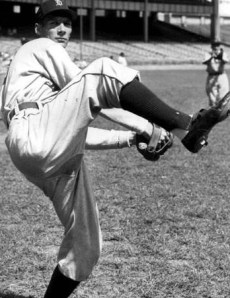
Hal Newhouser won only 207 games in his 17-season career (with an E.R.A. of 3.06), but during the seven year span of 1944 to 1950, he was dominant, going 151-80. He won the MVP award in 1944 and 1945 (the only pitcher in history to win the award in consecutive years), and he was second in MVP voting in 1946 (this was before the dawning of the Cy Young Award, in 1956). For his career, Newhouser pitched 212 complete games, and during his dominant seven years, he completed 136 of the 240 games he started (57%). Newhouser pitched in two World Series, winning one of them, but his performance wasn’t Newhouser-esque — he went 2-1 with an E.R.A. of 6.53 in 20.2 innings. And during his long career with the Tigers, he had a winning record in only seven of his 17 seasons. Take away those seven winning years, and his record during the other ten seasons was a mediocre 56-70. Still, all baseball historians know that Hal Newhouser belongs in the Hall of Fame. And if Newhouser’s a Hall of Famer, then so is Curt Schilling.
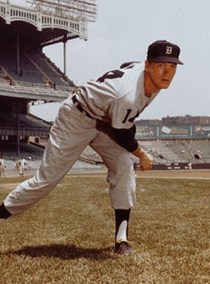
Jim Bunning was 224-184 with an E.R.A. of 3.27 during his 17-year career. He won 20 games only once, never won a Cy Young Award (though he did place second in the voting once), and he never pitched in the postseason. He did play on nine all-star teams, and he led the league in strikeouts three times (he’s 17th on the all-time K list with 2,855, which is 261 less than Schilling, who is 14th on the career list with 3,116, one shy of Bob Gibson’s 3,117). Jim Bunning belongs in the Hall of Fame, but his stats reveal that he was a lot like Curt Schilling - without the rings. So if Bunning’s a Hall of Famer, then so is Curt Schilling.

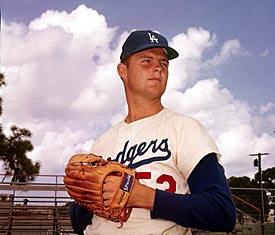
Don Drysdale was 209-166 during his 14-year career. He won 20 games twice, won the Cy Young Award once, and like Schilling, played in five postseasons, winning the World Series three of those times (he, too, was a winner). During his five World Series, Drysdale was 3-3 with an E.R.A. that mirrored his career E.R.A. of 2.95. He played on eight all-star teams and led the league in strikeouts three times (his 2,486 career strikeouts place him 30th all-time). Drysdale’s career was relatively short, so his career numbers don’t rank him among the all-time leaders in any category. But he was GREAT during the period he did play, and he played a major role on THREE World Series-winning teams. Does Don Drysdale belong in the Hall of Fame? Yes. And his inclusion means Schilling belongs in the Hall, as well.
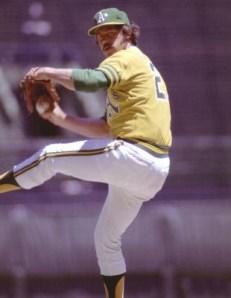
Jim “Catfish” Hunter was the ace pitcher of the A’s dynasty, compiling a career won-lost record of 224-166, with an E.R.A. of 3.26 in fifteen seasons. His 2,012 strikeouts place him 60th on the all-time list. He won 20 games five times (in consecutive years, 1971-1975), was an all-star eight times, and he pitched in SIX World Series, winning FIVE of them (three as a member of the A’s, and two as a Yankee). His World Series record was 5-3, with an E.R.A. of 3.29, and his overall postseason stats are 9-6, 3.26. Hunter won one Cy Young Award and placed second in the voting once, third once, and fourth once. He pitched one of only 15 9-inning perfect games (ever, including Don Larsen’s WS perfect game) on May 8, 1968. And even with fellow Hall of Famers Rollie Fingers and Goose Gossage as his team’s closers, Hunter still completed 181 games, or 38% of the games he started. Schilling’s Hall of Fame case is very similar to Hunter’s — their collection of World Series rings and their individual impact on these teams lead their resumes, and when their career stats are added to their postseason success, you just can’t keep them out of the Hall.

Here’s a summary of how Schilling compares with these four pitchers, plus Bert Blyleven, in various statistical categories:

Wins

1. Bert Blyleven - 287 (27th all-time)

2. Jim Bunning - 224 (67th all-time)

2. Catfish Hunter - 224 (67th all-time)

4. Curt Schilling - 216 (79th all-time)

5. Don Drysdale - 209 (95th all-time)

6. Hal Newhouser - 207 (99th all-time)

Winning %

1. Curt Schilling - .597

2. Hal Newhouser - .580

3. Catfish Hunter - .574

4. Don Drysdale - .557

5. Jim Bunning - .549

6. Bert Blyleven - .534

Postseason Record and E.R.A.

1. Curt Schilling - 11-2, 2.23

2. Bert Blyleven - 5-1, 2.47

3. Catfish Hunter - 9-6, 3.26

4. Don Drysdale - 3-3, 2.95

5. Hal Newhouser - 2-1, 6.53

6. Jim Bunning (no postseason appearances)

World Series Championships

1. Catfish Hunter - 5

2. Don Drysdale - 3

2. Curt Schilling - 3

4. Bert Blyleven -2

5. Hal Newhouser - 1

6. Jim Bunning - 0

Strikeouts

1. Bert Blyleven - 3,701 (5th all-time)

2. Curt Schilling - 3,116 (14th all-time)

3. Jim Bunning - 2,855 (17th all-time)

4. Don Drysdale - 2,486 (30th all-time)

5. Catfish Hunter - 2,012 (60th all-time)

6. Hal Newhouser - 1,796 (95th all-time)

20-win seasons

1. Catfish Hunter - 5

2. Hal Newhouser - 4

3. Curt Schilling - 3

4. Don Drysdale - 2

5. Jim Bunning -1

6. Bert Blyleven - 1

Placing Top-5 in Cy Young Award Voting, and Cy Young Awards

1. Catfish Hunter - 4 (1)

1. Curt Schilling - 4 (0)

1. Bert Blyleven - 4 (0)

4. Hal Newhouser - 3 times top-5 in MVP voting (2 MVPs)

5. Don Drysdale - 1 (1)

6. Jim Bunning - 1 (0)

All-Star Teams

1. Don Drysdale - 8

1. Catfish Hunter - 8

3. Hal Newhouser - 7

3. Jim Bunning - 7

5. Curt Schilling - 6

6. Bert Blyleven - 2

200-Inning Seasons

1. Bert Blyleven - 16

2. Jim Bunning - 13

3. Don Drysdale - 12

4. Catfish Hunter - 10

5. Curt Schilling - 9

6. Hal Newhouser - 7

Strikeout to Walk Ratio

1. Curt Schilling - 4.38 (2nd all-time, behind Tommy Bond, who pitched from 1874-1884)

2. Don Drysdale - 2.91 (39th all-time)

3. Jim Bunning - 2.86 (43rd all-time)

4. Bert Blyleven - 2.80 (47th all-time)

5. Catfish Hunter - 2.11 (200th all-time)

6. Hal Newhouser - 1.44 (643rd all-time)

Walks and Hits Per Inning Pitched (WHIP)

1. Catfish Hunter - 1.13 (42nd all-time)

2. Curt Schilling - 1.14 (44th all-time)

3. Don Drysdale - 1.15 (59th all-time)

4. Jim Bunning - 1.18 (92nd all-time)

5. Bert Blyleven - 1.20 (125th all-time)

6. Hal Newhouser, 1.31 (488th all-time)
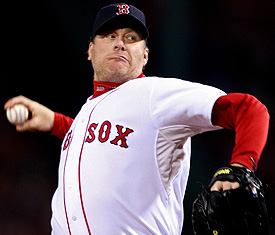
The “He Was Never a Dominant Pitcher of his Era” Argument: This is the most frustrating argument of all, because Schilling has been a dominant pitcher during his era. True, he has never won a Cy Young Award, but he has placed second in the voting three times (in 2004 he placed second behind Johan Santana, and in 2002 and 2001 he placed second behind future Hall of Famer Randy Johnson. In 1997, he placed fourth in the voting behind Pedro Martinez of the Expos, Greg Maddux, and Denny Neagle). Schilling has been selected to six All-Star Teams (1997, 1998, 1999, 2001, 2002, 2004) and has had three 20-win seasons (2001, 2002, 2004). His career ERA of 3.46 is better than that of Tom Glavine (3.53, and Hall-worthy), Roy Halladay (3.58, and on-track for the Hall), and Josh Beckett (3.75, and on-track for the Hall). He’s 13th all-time in strikeouts (one behind Bob Gibson) and his strikeout to walk ratio (4.38) is the lowest of any pitcher since 1900! And, of course, Schilling is one of the most dominant pitchers in postseason history… more about that below.

The “216 Wins Isn’t Enough” Argument: Now I understand this argument, and taken all by itself, it does have some merit. Schilling is 79th all-time in wins, and there are 30 pitchers with more wins who are Hall-eligible and have not gained enshrinement. These include Tommy John (288), Bert Blyleven (287), Jim Kaat (283), Jack Morris (254), Frank Tanana (240), Luis Tiant (229), Jerry Koosman (222), Joe Niekro (221), and Mickey Lolich (217). There are several active pitchers who are in the same zone as Schilling: Jamie Moyer (237), Kenny Rogers (215), Pedro Martinez (211, and Hall-worthy), John Smoltz (210, and Hall-worthy), Andy Pettitte (209). Like I said, if career wins was the sole indicator of Hall worthiness, Schilling probably wouldn’t make it.

But it surprises me when writers say, “He needs one more 15-win season to make it,” or, “Forty more wins, and he’d have my vote.” Why does this surprise me? Because I would expect educated sportswriters and historians of the game to understand that two more 15-win seasons wouldn’t change the monumental impact of Schilling’s career. Yes, they would help him compare more favorably with other greats on a list of career statistics, but that’s all. All the things that make Schilling a Hall of Famer have already occurred in his career. Anything he does from now until he retires is just stat-piling (unless, of course, he wins another World Series — which is possible). Some guys are in the Hall because their longevity and consistency helped them amass amazing career stats. And some guys are in the Hall because of the undeniable impact of their careers on Major League Baseball (Newhouser, Drysdale, and Hunter are the best examples among pitchers). If Schilling heals and pitches a couple more seasons, he’ll rise in the “longevity” category, but he’s already an elite force in the “impact” category.
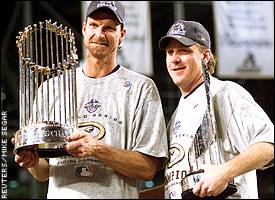
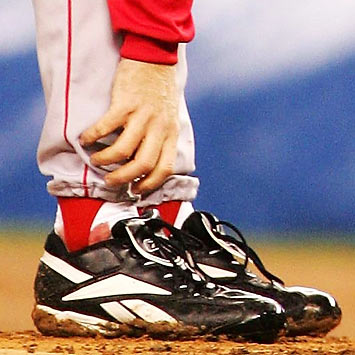
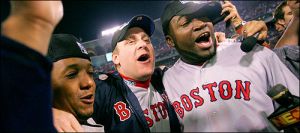
The Greatness Factor: The evidence that pushes Schilling into Hall of Fame territory is the key role he played on three World Series-winning teams. THREE. It’s not an exaggeration to say that, without Schilling on those three rosters (2001 Diamondbacks, 2004 Red Sox, 2007 Red Sox), NONE of those teams would have won it all. We all know about his clutch performance in the “bloody sock” game - the critical sixth game of the ALCS in Yankee Stadium, when he pitched with fresh sutures holding together his ankle. But let’s not forget that Schilling was the co-MVP of the 2001 World Series (as a Diamondback), in which he pitched 21.1 innings, striking out 26 Yankees and walking only two. His World Series E.R.A. that year was 1.69. All in all, during the 2001 postseason, Schilling was 4-0 with a 1.12 E.R.A., and he had 56 strikeouts and 6 walks in 48.1 innings.

“So that’s only one postseason,” you say. “Lots of guys get hot in one postseason. That doesn’t make you a Hall of Famer.” Fine. So let’s look at Schilling’s performance on the 2004 and 2007 World Championship Red Sox teams. During these two postseasons combined, Schilling went 6-1 with an E.R.A. of 3.20. He won the critical sixth game of BOTH ALCS series (2004 vs. Yanks, 2007 vs. Indians) with the Sox facing elimination, and in BOTH games he won with heart more than velocity. In the 2004 and 2007 World Series combined, Schilling started two games (remember, both series were four-game sweeps) and went 2-0 with an E.R.A. of 0.79. In total, Schilling’s postseason record is 11-2 with an E.R.A. of 2.23. He played in the postseason five times, and his team won the World Series in three of those appearances (amazing, given that in the Wild Card era, each playoff team should have a one-in-eight chance of winning it all).

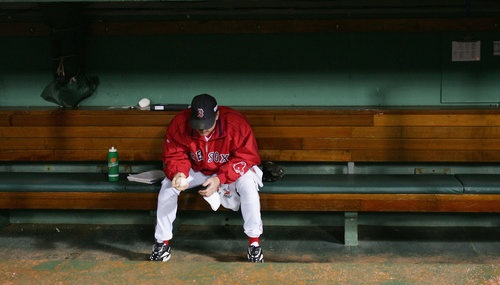
Curt Schilling is one of the greatest “winners” in the history of Major League Baseball. Sure, he won less than half as many regular season games as Cy Young won (512), but he’s among the elite in terms of winning BIG games. And when it comes right down to it, isn’t winning BIG games what it’s all about? Isn’t winning the World Series what it’s all about? Pitching greatness has several forms, and not all of them include 300 career wins. Hall of Fame members would be diminished by the omission of Curt Schilling. Not everyone loves the guy’s schtick (personally, I love his honesty and his determination to be himself), but no one can deny that he pitched his guts out every start, that he was among the most prepared and cerebral pitchers in the game’s history (who else returns to the dugout and immediately takes notes on the inning he just pitched?) and that he was one of the all-time greats when the pressure was most intense and the stakes were highest.

So, baseball writers, do your job and cast a Hall of Fame vote for Curt Schilling. And while you’re at it, don’t forget to put a check next to Bert Blyleven’s name, too.

Curt Schilling spent eight years as a member of the Philadelphia Phillies (1993-2000), and it was as a pitcher for this team that he showed the first signs of greatness. For a Philadelphia Enquirer writer’s take on why Schill belongs in the Hall of Fame, click here.

→ No CommentsCategories: Baseball · Red Sox Nation · Sports
Tagged: , , , , , , , , , , , , , , , , ,

Youth Baseball in Red Sox Nation: The Tryouts

June 22, 2008 · 3 Comments

“Tonight, you need to take your son to his summer league baseball tryouts, OK?” my wife said to me on a recent Sunday morning. No problem, I replied. I assumed that every child would be placed on a team appropriate for his level of skill, and that my baseball-loving son would simply be auditioning to show coaches which team he belonged on. What is it that they say about assumptions?

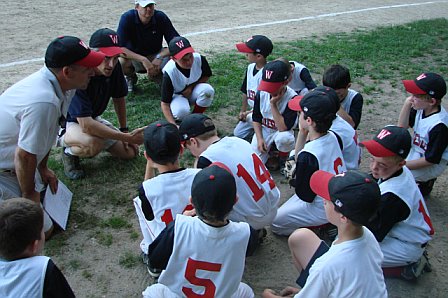
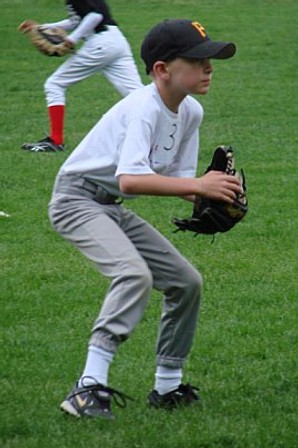
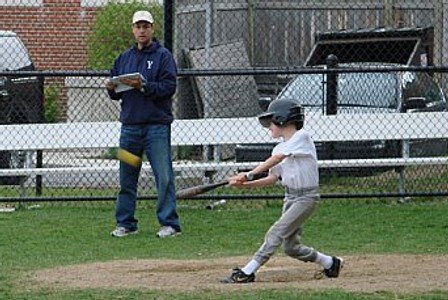
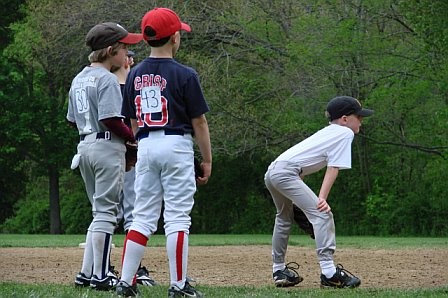
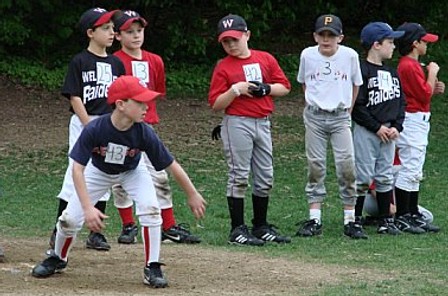
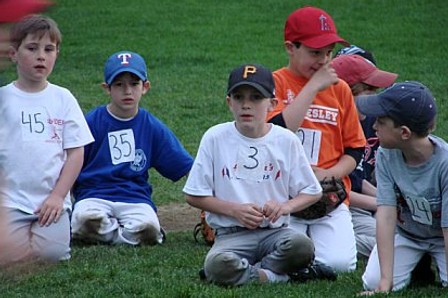
56 kids showed up for the tryout at a field with four diamonds. Each checked in at a table and received two stickers with a number — one for the front of the shirt, one for the back of the shirt. Then, they all found a partner and started warming up. What a sight: 28 pairs of 8 year-olds playing catch, each with visions in their heads of making a summer travel team, hitting .400, and eventually playing for the Boston Red Sox. Even the ones who can’t catch or throw very well.

Parents toting thermoses set up their lawn chairs at one end of the field to watch. I struck up a conversation with a friendly looking dad, and it was then that I learned that only 26 of these children would make a team — that there would be an “A” team, and a “B” team (each consisting of 13 players) and that 30 kids would be cut. Those 30 kids would have NO team to play on this summer. (”The spring league is for participation,” the other dad told me. “The summer league is for development and competition.”)

I was stunned. In my own baseball experience, I didn’t face do-or-die tryouts until sophomore year in high school (I still remember Coach Cohen reading my name at the end of that tryout, indicating I had barely made Brookline High’s JV team. In fact, the stick I picked up off the ground and held in my hands as he read my name sits on my dresser, the only good luck charm I’ve ever had.) Thinking from the point of view of an 8 year-old ballplayer, I was stunned at the harshness of it. And I was bewildered by the idea of 30 moms and dads consoling their third graders about not having a team to play on this summer. What would I say to my son if he were cut? Honestly, I couldn’t even begin to imagine that conversation. The kid lives for baseball. It would be devastating. I decided to cross that bridge if I came to it, and hope for the best.

The children were split into four groups of 14, and they cycled through four stations (hitting, ground balls, fly balls, and live infield situations) where they were evaluated by two to three coaches, each scribbling away on his clipboard after every play. Suddenly, it dawned on me that the skills my son had developed during those endless hours of wiffle ball in our backyard, and the thousands of ground balls and fly balls we had practiced in our front yard, and the two seasons of coach-pitch little league were being evaluated right now. It occurred to me that if I’d known the cut-throat nature of our town’s summer league tryouts, I’d have practiced a lot more with my son over the last year. Then it occurred to me that it was probably good that I didn’t know this, since it might have brought out the the “crazy over-coaching dad” that’s probably inside of me somewhere, which definitely would have killed my son’s passion for the game. His wiffle ball experience will have to carry him, I reasoned.

My heart sank every time he swung and missed. I wanted to bellow some encouragement to him, but with all the other parents silently rooting against my son, it didn’t feel right. Then he connected. I was surprised at my pride. Then a line drive, and another one. A couple of foul balls, a miss, then a weak grounder to third. “NEXT!” yelled the evaluator, and he was back in the field. Was that good enough? I asked myself.

He looked solid on the grounders - got in front of every ball, kept his butt down, used two hands, made some crisp throws to first base. For a moment, I deluded myself into believing I’d taught him his technique — the truth is, he was simply imitating his favorite player, Nomar Garciaparra.

At the end of the tryout, the coaches called the kids in and had them get down on one knee at home plate. Then one of the coaches brought out a gigantic trophy and explained to the youngsters that last year’s 8 year-old team from our town had gone undefeated and had won that trophy, and that the tryout group couldn’t touch it until they had won the right to have their own team’s name engraved on it. Nice. 30 of these kids are going to get bad news in a few days, and now that news will be even more painful to receive. I assure you, none of those 56 kids was in a state of mind to be inspired by the trophy - they just wanted to earn the chance to wear a town uniform!

Part II of the tryout continued one week later. The kids were obviously grouped by ability this time, and I was relieved to see that my son was in a group of somewhat capable players. I just wanted him to make a team — any team! I hadn’t begun to compose my “Michael Jordan didn’t make his high school JV team” speech, and I really didn’t want to. 30 of us parents were going to have to come up with something to ease their pain, though. I dreaded that, for all of us.

In the final twenty minutes, the coaches had the players line up at home plate and they timed them running from home to first, then again from home to second. As the kids crossed the base, the timer yelled out the results for all to hear, and another guy with a clipboard wrote down the times. I felt like I was at the NFL pre-draft combine. Then, the five fastest kids raced, then they narrowed it to two, and those two raced…. and we have a WINNER! And everyone cheered for the fastest boy. (The point of this, other than pure enjoyment for the adults running the tryout, completely eludes me.)

On the way home, my son spoke with total self-confidence. He was sure he had made one of the teams. I suspected all 56 of the young men felt the same way. “If you do make a team, do you care which team you’re on?” I asked. Nah, he said, I just want to play. I was about 43 times more nervous for him than he was for himself. So, this is what it’s like being the parent of an aspiring athlete, I thought. (Butterflies, and a total lack of control over the outcome.)

Then came the wait. 3 days, 4 days, 5 days, and no word from the league. “Did you get an email?” was the first thing my wife and I said to each other when we talked on the phone from work, or when we arrived home in the evening. “Nope, nothing.” Finally, an email came late one night. Based on the recommendation of our evaluators, we are pleased to offer your child a position on our Summer Eight Year Old Travel B Team.

I woke up my wife to tell her. We both felt the relief sweep over us, like we had just dodged a cannonball. And our son? When we told him the next morning, he was actually a little bit disappointed. Turns out he had his heart set on the A team. Did I mention he’s got a lot of self- confidence?

I couldn’t help but wonder about the other 30 kids who’d been cut, all of whom wanted to play baseball this summer. And what about their parents? At the same moment my wife and I were feeling a rush of relief, they were all preparing their consolation speeches. What could they say? “Michael Jordan was cut from his high school JV basketball team” is a good start, but then what? Perhaps towns should give all parents a Handbook on Talking With Your Child About Tryouts when they arrive on that first day. I know I could have used something like this had my son not been so fortunate….

POSTSCRIPT: My son read this article and said to me, “Daddy, half of the article is about what you would say to me if I didn’t make the team. But Daddy, there was no chance I wouldn’t make one of the teams.” Son, did you think about the other 30 kids who wanted to play summer baseball too, but got cut? “Daddy, they didn’t believe as much as I did.”

→ 3 CommentsCategories: Baseball · Children · Family · Life · Parenting · Red Sox Nation · Relationships · Sports
Tagged: , , ,

I’m A Member of Celtics Nation

June 17, 2008 · 2 Comments

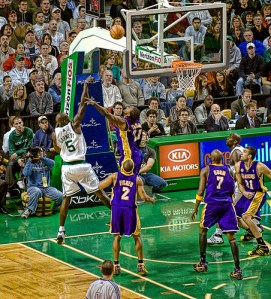
Watching the Celtics crush the Lakers in game 6 of the NBA Finals, I have come to a few conclusions:

1. Kobe Bryant is not in the same galaxy as Michael Jordan. If the Lakers had Jordan in his prime, instead of Bryant, this would have been a different series. (Perhaps this is obvious, but before this series, the comparisons of Bryant to Jordan were frequent.)

2. Danny Ainge deserves our praise not only for heisting Garnett from Minnesota and securing Allen from Seattle, while keeping Pierce — he deserves our praise for assembling this threesome PLUS the pieces around them: Posey, House, Rondo, Powe — who have proven themselves to be every bit as worthy of a championship as the big three. Remember Scott Wedman in 1986? Posey is 2008’s Wedman.

3. It’s amazing that Ainge even had a job last year when he assembled this team, and even more amazing that Doc Rivers was still the Celtics’ coach at the beginning of this season. Any other owner would have canned Ainge after the dismal 2007 season, and any other GM under the pressure that Ainge was under would have scapegoated the coach. These guys — Grousbeck, Ainge, and Rivers — stuck together and now they have an NBA Championship. I love that. Will Eddie House be the GM of the 2030 NBA Champion Celtics?

4. The Lakers-Celtics rivalry of 2008 isn’t even close to what it was in the 1980s, though the press tried to remake that ’80s rivalry prior to this series. The Lakers teams of the ’80s were stocked with hall of famers and this Lakers team has one great player. Everyone knew back then that those Celtics and Lakers teams were among the best teams in NBA history and future. And there was a lot of animosity between those Celtic and Laker players. There’s no Kurt Rambis on either of these teams, and I haven’t seen one jawing match between a Celtic and Laker this entire series.

5. Kevin Garnett became one of my favorite athletes of all time after about 1/4 of the regular season. I don’t think I’ve ever seen a Boston athlete with his level of intensity. Pedro Martinez is the only one who comes close. And the Celtics haven’t had a player whose ONLY focus was winning since Larry Bird. Garnett couldn’t care less about his stats, about winning awards, about making the all-star team. All he cares about is winning, and he understands that winning requires a total team effort. He taught this team how to be a TEAM, and as a result he helped his teammates achieve their highest individual potential. What a gift Garnett has been to Boston’s sports fans — just to see how he approaches every game.

6. I love that the Celtics are playing hard right to the end of this game. They are playing with joy and pride, as though this is the last time they will play together for the rest of their lives. They are playing as though it’s really, really fun to be acknowledged as the best team in the NBA. They are playing like they want to leave no doubt that they are the champions. They are showing any kids who are awake to watch (approximately seven across the country — thanks ABC and David Stern!) how to finish a game - and a season - strong.

7. Can you believe this team was forced to play seven games against the Hawks in the first round, and seven against the Cavs in the second round?

8. I haven’t attended a Celtics game since 1991, when I was given a comp ticket by my cousin, Walter Palmer, who was a center for the Utah Jazz at that time (second round pick in the 1990 NBA draft). Wish I could’ve been there tonight.

→ 2 CommentsCategories: Sports
Tagged: , ,

No East Coast Kids Saw This

June 12, 2008 · 1 Comment

There are two minutes left in game four, and the Celtics are up by 4. The Celtics have just overcome a 24-point deficit, on the road, for one of the greatest comebacks in NBA Finals history. My 9 year-old son would have loved to have seen this. Too bad the game started an hour after his bedtime (though we let him stay up, and he made it through the first quarter before passing out on the couch). A whole generation of future Celtics fans is missing the creation of new Celtics legends — even if they want to see it live. They’ll have to settle for seeing the highlights on Sports Center tomorrow. I know it’s a business. I know that’s why the games start so late (9:00pm) and end so late (about 11:45pm). I get it. That doesn’t mean it’s not a real shame, though.

→ 1 CommentCategories: Children · Family · Parenting · Sports
Tagged: , ,

Celtics Pride Remembered and Revived

June 8, 2008 · No Comments

As I sit here watching the Celtics and Lakers compete in game two of the NBA Finals, I’m experiencing flashbacks. I was a senior at Brookline High School during the Celtics’ awesome 1985-1986 season, and I remember that every Celtics game was truly an EVENT. “Let’s watch the Celtics game — your house or mine?” You simply didn’t miss a game on TV. Even as 17 year-olds, my friends and I were aware that we were watching an historic team. My father, a basketball player himself who, in 1954, was the center on the first college team ever coached by Al McGuire, told me and my siblings all the time, “You will tell your children about Larry Bird. He is one of the best ever. Why? Because he makes his teammates better.” It was such a joy to watch that ‘86 team pass, shoot, and play as a TEAM. And do you recall? NO ONE beat the Celtics at the Garden (well, they actually did lose a single game at home that season, going 40-1). We were invincible at home.

I remember that my Brookline High School graduation took place DURING GAME SIX of that year’s Finals, a game in which the Celtics beat the Rockets to take the World Championship. The graduation speaker was Kitty Dukakis (wife of the then-Massachusetts governor, and a Brookline High graduate), but I didn’t hear a word she said, because the kid sitting in front of me had a Sony Watchman (a rare possession at that time) and we were glued to his black and white mini-tube. Everytime the Celtics or Rockets scored, the new score would be passed through the student body through lightning-quick whispers.

And I also remember that Jim Craig (the goalie for the 1984 U.S.A. Olympic ice hockey team) attended our graduation, and when I saw him there, I ran home, got the Globe and Herald I had saved from the day after the Miracle on Ice, brought them back to B.H.S. and asked Craig to sign them, which he did. (What do you think these would fetch on eBay?) I was much more excited about the Celtics’ victory over Sampson and Olajuwon and about meeting Jim Craig than I was about my graduation. Indeed, I probably wouldn’t remember anything at all about that day were it not for the WAY I watched the clinching Finals game and my encounter with gold medalist Jim Craig.

What will I remember 22 years from now about the 2008 NBA Finals? Those two consecutive monster dunks I just saw by Leon Powe? Probably not. Paul Pierce leaving the court in a wheelchair, then returning to drain shot after shot? Perhaps. Kevin Garnett? Definitely. What a force of nature he is. But often, what we remember about a championship is related to where we were when the final game was clinched, who we were with, or what circumstances were present in our lives on that day.

First, let’s win….. the memories will take care of themselves.

→ No CommentsCategories: Sports
Tagged: , , , , , ,

What Have You Done 500 Times?

June 6, 2008 · 3 Comments

So Manny finally connected for his 500th career home run (and then his 501st, 502nd, and 503rd). Only 24 people in major league history have achieved this milestone. That’s one of the marvelous things about baseball — performance is so quantifiable. We KNOW that Manny Ramirez is one of the greatest 24 home run hitters of all-time. It’s simply not debatable.
So this got me thinking — what’s the equivalent of hitting 500 home runs in non-athletes’ careers? What’s a high level of accomplishment in your field that only 24 people in history have ever reached?

I was a teacher for eight years. Perhaps the equivalent to 500 home runs in teaching is having 500 former students credit YOU with having taught them an invaluable life lesson.

For a pediatrician, how about accurately diagnosing 500 difficult-to-diagnose cases, keeping the patient and parents calm, and prescribing proper follow-up care?

For a minister, priest, or rabbi, the equivalent might be delivering 500 truly superior sermons.

For a parent of five (like me), I’d say showing up for 500 little league games, soccer games, swim meets, karate tests, dance recitals, school plays, class art shows, teacher conferences, and graduations — without missing one — would be the equivalent of hitting 500 home runs.

Probably during the season of 2011 or 2012, Manny will hit his 600th home run. I don’t even want to think about what it would require to be a 600-homer parent…..

→ 3 CommentsCategories: Baseball · Children · Family · Parenting · Red Sox Nation · Sports · Success
Tagged: , ,

Race To See A No-Hitter

May 19, 2008 · 4 Comments

I have always wanted to witness a no-hitter in person. Tonight, I finally did. Did I have a ticket to the game? No. Did I watch the whole game? No. In fact, I slept through a couple of innings. But I was at Fenway for the last two outs. Here’s how I experienced Jon Lester’s no-hitter.

From 7:30 to 8:00pm, I got my boys (9 and 6) ready for bed and read aloud to them. As they fell asleep, I also fell asleep in my chair with the book on my lap. At about 8:30pm, I sat on the couch next to my wife and we spent perhaps 15 minutes perusing digital photo albums of our kids with the Sox game on TV in the background. I noticed the Sox were winning 5-0, but it wasn’t until the middle of the seventh inning that I noticed the zeros in the Royals’ hit column. “He’s throwing a no-hitter!” I said to my wife. “I have to drive down there!”

Wearing sweatpants and a t-shirt, I bolted for the car and began my speedy 12-mile sprint down Route 9 to Fenway Park. Listening to the game on the radio, I was distressed when the Sox went down quickly in the bottom of the seventh. “Come on guys!!” I yelled, imploring our hitters to give me some time to get to the park. The top of the eighth flew by too as the Royals went 1-2-3, and it was at that point that I arrived at the section of Route 9 where there is ALWAYS a speed trap. Reluctantly, I slowed down to the speed limit (prudent — the car behind me got pulled over).

As the Red Sox batted in the bottom of the eighth, I hit another sand trap: construction that narrowed the road to one lane of slow-moving traffic. “NOOO!” I screamed. But I hit mostly green lights, and as Lester took the mound for the top of the ninth, I turned onto Boylston Street and searched frantically for a parking spot. Lester threw ball four to the leadoff hitter, Esteban German, at the same moment that I found an empty parking space at the McDonald’s opposite Yawkey Way. A sprint across the street and down Yawkey Way to Gate B, a flash of my Red Sox Nation VP credential to the security dude, and I was in the bowels of the park. Continuing to run at full speed, I headed for the ramp on the first base side and emerged into Fenway at the same moment that David DeJesus grounded out to Kevin Youkilis for out number two. “Wooooo hooooo!!” I had just arrived, but I was immediately in synch with the rest of the crowd that had been there for three hours.

As I walked along the main aisle towards right field, fans jumped up and down, screamed, prayed, clapped, smiles on all their faces. Several people reached out to me with high-fives as I walked by. What a feeling. THIS IS FENWAY PARK, I was thinking. I found an empty box seat just beyond first base and planted myself there to watch the last few pitches. “This is it, I’m finally going to see a no-hitter!” Strike three to Alberto Callaspo! Then, bedlam. Absolute bedlam. The crowd noise completely drowned out “Dirty Water” as it blared through Fenway.

I was there. After all these years, I can say I was there.

→ 4 CommentsCategories: Baseball · Children · Parenting · Red Sox Nation · Sports
Tagged: , ,

Questions of a Six Year-Old at Fenway

April 23, 2008 · No Comments

As I wrote in my previous article, on Patriots’ Day I took my six year-old to his first Red Sox game, and afterwards we cheered for the back-of-the-pack between miles 22 and 25 on Beacon Street. Someday, this boy will know all the ins and outs about baseball (like his nine year-old brother). But this is the first spring that he has begun to show glimmers of interest in the Red Sox, so a visit to Fenway is different for him than for everyone else at the ballpark. And after he’d asked me a few questions during the first inning, I knew I had to write down all of his questions for the rest of the game. Classic stuff:

Can I have a hot dog? (Sure.)

Why do we have our gloves on? (In case a foul ball comes back here, we’ll be ready to catch it.)

Why is that screen there? (To protect the fans behind home plate from dangerous foul balls.)

But how do the balls come back here? (When the hitter swings his bat, sometimes the bat doesn’t hit the ball squarely and the ball flies in back of home plate.)

Can we do something besides just sit around? (Sure we can walk around a little bit.)

(We were walking past a concession stand.) Can I have some pizza? (Sure.) Can I have a big cup of Coke? (Sure.)

(Back in our seats.) Can I have a foam finger? (Sure, let’s go catch up with the foam finger vendor.)

(The crowd suddenly cheered after a Rangers player popped out for the third out of an inning.) Is that good Daddy? (Yes, that’s good, now the Red Sox get a turn to hit and to try to score some runs.)

(The crowd suddenly cheered after Ellsbury stole second base.) Is that good Daddy? (Yes, Jacoby Ellsbury just stole second base.)

Who’s winning Daddy? (The Red Sox are winning.) Yay, the Red Sox are winning!

Why did they turn on the lights? (Good question, I really don’t know why they turned on the lights on a sunny day.)

What’s the score? (Six to nothing.) Is this normal? (No, this is really good.) I mean, are they major leaguers? (Yes.) This is stupid. (Why?) I thought that major leaguers were supposed to be good. (They are, but our pitcher, Clay Buchholz, is pitching so well, the Rangers can’t get very many hits.) Oh.

Is it almost nighttime? (No, it’s 1:20pm.) Is the game almost over? (Well, we’re in the fifth inning and the whole game lasts nine innings.) So there are four innings left? (That’s right.) Will it be nighttime when the game is over? (No, there’s a lot of daytime left.) Good, ’cause there’s a show I really want to watch on TV tonight. (What show is that?) I forget the name.

Is a trillion more than a billion? (Yes.) How many trucks would you need to carry a trillion dollars? (Um, a hundred.) No, you’d just need one, because you could have one bill with a trillion on it.

Daddy, I made up a number. (Really? What is it?) A killion. And it’s so big, the dollar bill would be as long as Fenway Park. It’s as big as a trillion billion dollars.

(Look, here comes the wave.) What’s the wave, Daddy? (That’s the wave.) Why do they do the wave? (Because it’s fun.)

(We were on the sidelines of the marathon and I had cheered for many runners by reading the names on their shirts. My six year-old was incredulous.) Daddy, how do you know all these people?

→ No CommentsCategories: Baseball · Children · Family · Life · Parenting · Quotations · Red Sox Nation · Relationships · Sports
Tagged: , , , , ,

Patriots’ Day: Boston’s (and my kids’) Best Day

April 22, 2008 · 6 Comments

Patriots’ Day was established as a Massachusetts (and Maine) civic holiday to commemorate and celebrate the Battles of Lexington and Concord, the first battles of the American Revolutionary War. And in Boston, we know how to celebrate our history in style — a Red Sox game at Fenway for breakfast (11:05am start time), and the world’s coolest foot race (Boston Marathon) for lunch.

Today, I was lucky enough to attend the game with two of my children (9 and 6) and their friend (9), enjoying a rare Monday day game while kids in other states across the country were busy toiling away in school. And after Delcarmen nailed down the final out, we walked three miles from Fenway to Cleveland Circle, cheering on those runners at the back of the pack, the ones who needed our wild cheers the most.

At 9:00am, my boys and I picked up a friend and posed for our first photo of the day.

Daddy needed a cup of coffee, so a quick stop at Dunkin’ Donuts was required. The Papelbon poster got us into the mood for the day.

We parked the car at a friend’s house near Cleveland Circle, and the small plot of green grass in the front yard meant that forward progress towards Fenway would have to wait for a few minutes…. boys will be boys.

The Reservoir T-stop was crawling with Red Sox fans…

… and we squeezed close together on the train to make room for Sox fans getting on at subsequent stops.

The walk from the Fenway T-stop to Yawkey Way is one of the great walks in North America.

The goosebumps get huge when you get to Brookline Avenue and see the crowd outside Fenway.

This was my six year-old’s first game at Fenway (since he was too young to remember anything), so I taught him to hold his hand over his heart during the National Anthem. He sang at the top of his lungs.

After two innings, my six year-old started getting restless. Hot dogs and pizza helped a little. But what he really wanted (and needed, it turned out) was a Red Sox #1 foam finger!

Let us not underestimate the power of the foam finger! To a six year-old, it can provide hours of companionship, entertainment, and enjoyment!

Then, in the fifth inning, it was time for…. the blankie!

By the 8th inning, many of the seats had been vacated, so the boys headed down to the very front, where they sang “Sweet Caroline” and cheered the Sox to a sweep of the Rangers.

What would a perfect Patriots Day be without a greeting from Wally the Green Monster? (The six year-old is not pictured here, because he was sobbing about his blankie, which he’d dropped into a puddle of beer.)

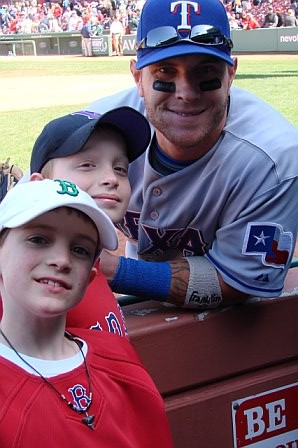
And I honestly can’t remember the last time I saw a player signing autographs at Fenway Park…. but after the game, Josh Hamilton of the Rangers signed for one and all… and made it an extra-special day for a lot of kids.

Then, it was time to head out to Beacon Street to cheer on the marathoners!


Petting the dog wearing the Kevin Garnett jersey was a highlight of our long walk from Kenmore Square to Cleveland Circle. And at the end of our walk, my six year-old proclaimed, “My feet ache all over. But that was the best day of my LIFE!”

A Monday without school, a day spent with family and friends, four hours at Fenway Park on a sunny day, a Red Sox win, the opportunity to high-five courageous runners as they near the finish line of a long, grueling race, and memories to last the rest of the year and longer. What’s better than that?

→ 6 CommentsCategories: Baseball · Children · Family · Life · Parenting · Red Sox Nation · Relationships · Sports
Tagged: , , , ,

What’s Really Buried is Yankees’ Pride

April 14, 2008 · 3 Comments

When I first heard that a Red Sox jersey had been buried in the cement under Yankee Stadium, it never occurred tAP photoo me that the Yankees would: a) Make a big deal out of it, or b) Even consider digging into the foundation to exhume the shirt. But that’s because I was still thinking about the proud Yankees of pre-2004, who would have simply laughed at the story, then ignored it. (Dominance over a team gives you that privilege.)

The Yankees of 2008 are a different lot –- they have become the Red Sox of pre-2004! What better evidence is there that the Red Sox are “in the heads” of the Yankees than the fact that the Yankees’ front office went to the trouble and expense to unearth the Red Sox jersey, and that they made such a public spectacle of the whole issue. Like Hank Steinbrenner’s pathetic, naive denial of the existence and magnitude of Red Sox Nation in March, this is just another clear sign that the Yankees are frustrated and demoralized, forced by the Red Sox’ superiority to worry about curses and jinxes and garbage like that. A proud Yankees franchise wouldn’t have roared at such a clever, funny stunt.

If the Red Sox fall to the #2 spot behind the Yankees in the rivalry again (perhaps about 86 years from now?) we need to take a cue from these misguided Yankees executives and remember not to act so obviously and obsessively inferior.

And anyway, it seems to me the noble jinxing effort of Gino Castignoli (born and raised in the Bronx) had an effect opposite its intention: Big Papi, whose shirt spent several months under the new Yankee Stadium, has been mired in the worst slump of his career this April. Now that that darn jersey is out of its tomb in the Bronx, I expect him to explode…

→ 3 CommentsCategories: Baseball · Red Sox Nation · Sports
Tagged: , , , , ,

Red Sox Nation Loves the Yankees

April 12, 2008 · 2 Comments

The rivalry is back, with the Yanks taking the first of their 18 regular season meetings this year. 17 more games before October? That’s the equivalent of an entire New England Patriots season. Almost an overdose. And with the rivalry stoked by that construction worker who buried a Red Sox t-shirt in the foundation of the “new” Yankee Stadium, we’re all assured another century of emotionally charged competition. Would you say that “the rivalry” is the best aspect of being a Red Sox fan? I would.

Along those lines, I wrote a guest post at the Sox and Pinstripes blog about why most of us who profess to hate the Yankees actually love them. Here is an excerpt:

I like to think that, before I was born in August of 1968, God let me choose the circumstances of my life: “Well, being a rabid baseball fan seems like a lot of fun,” I told Him, “So I think I’d like to live sometime during the 19th, 20th, or 21st Century, on Earth.”

“All right,” said God, “but please be more specific. When and where, exactly, would you like to be born?”

I thought about it and replied, “I hear that sports rivalries are charged with emotion and excitement, so please put me in a city whose team has a fierce rivalry with another team – the fiercest in all of baseball – and let me be born at a time in history that will allow me to experience that rivalry at its peak, OK?”

“Consider it done,” said God. “But one more thing – would you like to become a fan of the team that wins more championships than any other during the 20th Century? Or would you like to become a fan of the team that wins the first World Series in 1903, but later on experiences a championship drought virtually unparalleled in professional sports?”

“Hmmm.” I pondered my options. “Just make me a fan of the team that gives its fans the lowest lows and the highest highs. I want to experience the greatest possible range of emotions as a baseball fan during this lifetime.”

“No problem,” said God as he cracked a knowing smile.

To read the entire guest post at Sox and Pinstripes, click here.

→ 2 CommentsCategories: Baseball · Red Sox Nation · Sports
Tagged: , , ,

Opening Day! (new song)

April 7, 2008 · 5 Comments

There are hundreds of songs about Christmas, but I can’t think of one song about the best holiday of the year: Opening Day. So this past weekend, with the excitement of the home opener building, I sat down and wrote a song about Opening Day (lyrics below). On Sunday night, after my kids were all in bed, I recorded it in my basement onto my Mac laptop using GarageBand software. Five tracks: two acoustic guitars and three vocals. Click on the box (right) to listen. Enjoy!

Opening Day!
by Rob Crawford (ASCAP)

Well it’s Opening Day
Winter’s gone, let’s celebrate
Skipping school for the game
Got no choice, it’s in my D.N.A.
Baseball everyday ’til fall
Sing Spangled Stars, then let’s play ball
Yes it’s Opening Day
Life’s good again

Opening Day!
Opening Day!

Well it’s Opening Day
Winter’s gone, spring starts today
Skipping work for the game
Guess I’ll update my resume
From Japan to Canada
U.S.A. to Latin America
Yes it’s Opening Day
Life’s good again

Opening Day!
Opening Day!
This is the year we go all the way
It all starts on Opening Day

Well it’s Opening Day
Winter ended yesterday
Skipping school for the game
It’s a Red Sox Nation holiday
And the rockets’ red glare
The bombs bursting in air
Yes it’s Opening Day
Life’s good again

Baseball everyday ’til fall
No more hot stove, let’s play ball
Yes it’s Opening Day
Life’s good again

Opening Day!

→ 5 CommentsCategories: Baseball · Children · Red Sox Nation · Sports
Tagged: ,

An 8 Year-Old’s Fantasy Baseball Draft: Emotion vs. Analysis

April 3, 2008 · 6 Comments

fantasy-baseball.jpgI started playing online fantasy baseball in about 1995 or so, and it’s now an annual tradition. Draft day has become a holiday on my calendar and is as eagerly anticipated as any day of the year. This year’s draft — my son’s first — will go down in history as my favorite of all-time, for it demonstrated the emotional hold that our beloved Red Sox players have over us, especially when we’re kids.

A Co-Manager Comes of Age

The last two years, my almost-nine year-old son has “co-managed” my fantasy baseball team with me (I’m in a 12-team Yahoo! league with my brothers, sister, father, and several close friends). The main impact of his co-management has been the reliable presence of Nomar Garciaparra on the roster and also in the starting lineup whenever he has been healthy. (”Daddy, put Nomar back in the lineup!”) Although my son was only five years old when Nomar was traded, #5 remains a god in our house.

backyard-and-hes-off.jpgThis past fall, my son managed his own fantasy football team against his dad, uncles, aunts, and grandparents and WON the league. He established himself as a draft wizard, grabbing Peyton Manning, Randy Moss, and Adrian Peterson with his top three picks. So, riding a wave of pride and optimism, in February he asked to manage his own fantasy baseball team. Confident that he was ready to compete with the big boys, we expanded the league to 13 teams.

The Draft: Peavy or Beckett? Sizemore or Ramirez?

We bought all the fantasy baseball magazines and studied them closely for a month. The day of the draft (7:30pm start time), I hurried home from work to be sure he was ready, and when I arrived, I was treated to a wonderful sight. He had created an information cockpit for himself at the computer. Surrounding his seat on all sides were stat sheets, handwritten draft lists for every position, articles about sleepers and busts, and various pages ripped out of magazines. “Daddy, I know who I’m going to pick if I get the first pick,” he proclaimed eagerly. “Jake Peavy!” (Peavy scored the most points in our league last year — so he was a logical choice.)

A few minutes later, the draft order was revealed on our Yahoo! draft site. My son had pick #3, and I had pick #4. “I really hope Peavy will still be there at number three!” he prayed. I set up shop at my laptop in a room adjacent to his cockpit.

jake-peavy.jpgAt 7:30pm sharp, the draft went live. Suddenly, A-Rod was gone. “Yes! He took A-Rod!” The second pick was… Jose Reyes. And the clock started ticking on my son’s pick, number three. He had 90 seconds to click on Jake Peavy. But he froze. Pick Peavy, I urged. “I don’t know, Daddy,” he said, struggling with a decision. “Maybe I want Josh Beckett.” Peavy’s a great pick, Beckett’s a great pick, I told him. 20 seconds left. Make your pick! “I want Josh Beckett.” Click.

Emotion trounced Analysis. How great is that??

Fast forward to the second round. My son had spent the rest of the first round studying his notes to figure out who to take next. “If he’s still available, I’m going to take Grady Sizemore with my second pick,” my son announced. Good choice, I assured him. Then came his turn to draft. And he froze. Pick Sizemore, I urged. “Daddy, do you think I should take Grady Sizemore or Manny Ramirez?” he asked. You’ll be able to get Manny in the next round, I assured him. Go for Sizemore this round. “Don’t tell me what to do!” he said curtly. And suddenly, Ramirez was Beckett’s fantasy teammate.

Emotion 2, Analysis 0.

Let’s jump to the third round. “I think I’m going to take Jonathan Papelbon,” he said. “Do you think that’s a good pick, Daddy?” He’s a great player, I told him, but no one’s going to pick a closer until the fifth round at the earliest. You can get him in a later papelbon-wins-series.jpground. “Don’t tell me what to do!” Click. Papelbon joined his Red Sox teammates on a roster that was looking more and more like a tribute to the posters on my son’s walls.

Emotion 3, Analysis zilch.

Fourth round — analysis had been totally abandoned and emotion had taken over. He wanted to pick Dustin Pedroia but I convinced him that Mike Lowell would be a better pick. And in the fifth round, he picked his first non-Red Sox player: Torii Hunter. By the end of the draft, his team included Tim Wakefield, Johnny Damon, and of course, our favorite player of all time, Nomar Garciaparra (secured with his 24th, and final pick).

Clearly, my son drafted a good team. With Beckett, Ramirez, Papelbon, and Lowell anchoring his roster, he’s got as good a shot as anyone to win the league. But I’ll always remember all the research he did, all the logical planning and rational reasoning his left brain performed, and how the loyalty and emotion of his right brain - the side that loves the Red Sox - swooped in at those moments of truth and buried his analytical, stat-focused left brain. He’s eight. What a fantastic age to be a Red Sox fan!

And for the record, my first pick (#4 overall) was Johan Santana, and the only Red Sox player I secured was Coco Crisp. (My left brain is counting on him being traded, batting leadoff for a National League team, and winning the N.L. batting title…..)

→ 6 CommentsCategories: Baseball · Children · Family · Parenting · Red Sox Nation · Relationships · Sports
Tagged: , , , , , , , , , , , , ,

Red Sox Nation is Flat, and other final thoughts from Japan

March 27, 2008 · 2 Comments

manny-hits-double-in-japan.jpgFinal reflections from Japan as I wait for the bus to the airport:

An Important Call From Home

Calls from the U.S. to Tokyo are expensive, so when I received a call from my wife on Tuesday morning (Monday night in the U.S., several hours after the Sox’ opening day victory), I knew it had to be about something important. “Your son wants to talk with you,” she said. Then my almost-nine year-old got on the phone. “Daddy, guess what, Manny Ramirez got me 8 points for my fantasy baseball team last night, and I’m in first place!”

OK, who wants to bet with me about who’s going to have more fun playing Fantasy Baseball this year?? (That was a priceless phone call.)

wally-yonamine.jpgWally Yonamine: The First Japanese Player to Hurry

This morning, I read that the first American born man to play in Japan (Wally Yonamine, Central League MVP in 1957, born in Hawaii) was the first professional player to sprint from home to first on ground balls (before him, Japanese pros jogged or walked – could Manny Ramirez possess the soul of an ancient Japanese baseball player?) and the first to break up double plays by sliding hard into second base. That helps explain why no one is ever in a hurry here in Japan.

I mean, I felt no need to wear my seatbelt in the taxis I rode in. You just have to trust me when I tell you that Tokyo drivers are the safest on the planet. No one’s driving is even remotely aggressive. This was a problem when I was in a rush to get to the Tokyo Dome to film some interviews with Japanese fans for NESN. In Boston, my half-hour trip would have been cut down to 10 minutes (at the expense of the safety of other drivers on the road). Drivers here are actually cooperative, as if the people in the cars around them are members of their family or close friends. (Let me be clear: I think this is awesome.)

interviews-with-japanese-fans.jpgInterviews with Japanese Baseball Fans

Before the second game of the Sox-A’s series, I had a chance to interview Japanese fans through an interpreter. Their answers to my questions were truly illuminating. First of all, three different people said, “Please take good care of Matsuzaka and Okajima” in response to my question, “Is there anything you want to tell the baseball fans back in the U.S.A?” Secondly, in response to my question, “What do you think of the U.S. fans who are here at Tokyo Dome?” all six of the fans I interviewed said, “We are grateful to the U.S. fans for coming here and showing their teams so much support.” Grateful is the key word. Several of the fans with whom I spoke said that their favorite Red Sox players were people other than Matsuzaka and Okajima (with Ramirez and Ortiz leading in popularity).

red-sox-nation-is-flat.jpgRed Sox Nation is Flat

Ladies and gentlemen, not only is the world flat, as Thomas Freedman’s book title declares, Red Sox Nation is flat. Although I don’t have a specific quotation to prove it, it’s obvious to all U.S. fans here that the Red Sox fans at Tokyo dome are true fans of the Red Sox, not just fans of their country’s stars playing in the Major Leagues. They talked about the history of the Red Sox, they talked about Fenway Park, and they talked about current players as knowledgably as a Boston fan would. “Manny’s my favorite player because he’s so goofy and relaxed, and a great hitter,” said one young fan wearing a Ramirez t-shirt. “I became a fan of the Red Sox because of Nomar Garciaparra” said another fan. “I love his style of play.”

One fan who believes my powers as VP of RSN are supreme bent my ear for five minutes, expressing her frustration that “the Yankees and Mariners games are all televised in Japan because Matsui and Ichiro are everyday players, but Red Sox games are only televised when Matsuzaka pitches. Can you change that?” She also let me know that MLB-TV doesn’t work in Japan. “All of Japan is a blackout area,” she said indignantly.

remy-orsillo-drew-and-others-in-japan.jpgQ&A With Ramirez, Remy, and Friends

The Red Sox hosted a luncheon for Red Sox fans in Tokyo on Wednesday, and after lunch we were surprised with special guests J.D. Drew, Alex Cora, Manny Delcarmen, Manny Ramirez, President Jerry Remy, and Don Orsillo. Obviously, Ramirez’s presence was electrifying. After they all signed autographs, there was time for a Q&A. Here are the highlights:

One fan asked all of them, “What’s surprised you most about being in Japan?” and Alex Cora immediately responded, “That Manny [Ramirez] made it here.” (laughter) “And by the way, his grandmother’s doing fine.”

Ramirez was asked who he considers to be the toughest pitcher to face in baseball, or which pitcher he fears the most. Manny thought for about five seconds, then responded jovially, “I’m ready. Nobody’s tough for me. I’m ready.”

One fan asked Don Orsillo to name the announcers who have been his biggest inspirations. He responded immediately, “Ken Coleman and Vin Scully.”

A fan asked Jerry Remy if, when he was a player, he ever thought he’d be a baseball TV announcer. “No, because I couldn’t put a sentence together then, and I still can’t.” (laughter) “I really have no idea how this happened!” Then Ramirez added, “When we all saw him playing, we knew he’d be an announcer.”

One fan asked Ramirez if he could please let us know which exact date he expects to hit is 500th home run. “Hey, my goal is to reach 500 this month.” (He currently has 492 career home runs.)

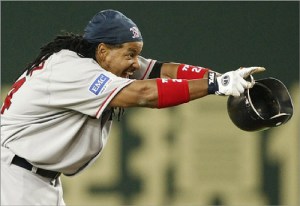
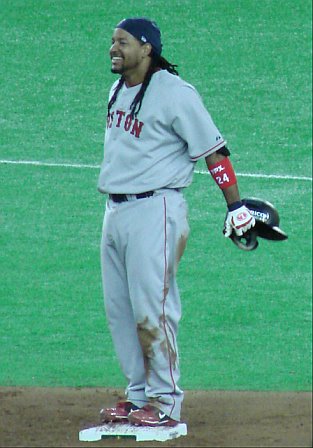
J.D. Drew was asked why the Red Sox don’t run more. “Well, we don’t have a lot of speed. (laughter) And I think we all saw how fast Manny is yesterday.” (laughter – Manny stood at home plate to admire his game-winning double before beginning to run, and was almost out sliding into second.)

When Ramirez was asked to make a prediction for this season, he said, “Man, I’m gonna lead the league in RBIs. AGAIN. (laughter) And we’re gonna repeat, we’re gonna do it again. We’re a DYNASTY.”

kid-red-sox-fans-in-japan.jpgJapan’s Social Culture is Highly Advanced

A Red Sox fan asked me this morning, “What’s been the most memorable moment of the trip for you?” My answer was, “Brandon Moss’s game-tying homerun (9th inning of Opening Day victory) and shaking Manny Ramirez’s hand.”

But I know that the more enduring memories of my trip to Tokyo will be about the people here and the stunningly advanced social culture of cooperation and respect for others. As one Japanese fan said to me in an interview, “We have learned a lot from American baseball players, but we think American players can learn a lot from how the Japanese play the game, as well.” This is absolutely true (the Japanese are obsessed with fundamentals and practicing), but in terms of what all Americans can learn from Japanese culture, the fan’s comment doesn’t go nearly far enough.

→ 2 CommentsCategories: Baseball · Children · Parenting · Red Sox Nation · Sports

Opening Day “Wa”

March 25, 2008 · 4 Comments

(”Wa” is a Japanese term meaning “unity and team spirit.”)

japan-trip-sox-fans-celebrate.jpg

japan-trip-kid-fans-3.jpg 

japan-trip-nomar-fan.jpg

What a way to start the season! I officially lost my voice when Brandon Moss hit that game-tying home run in the top of the ninth inning off of Oakland’s ace reliever, Huston Street. How about that — a rookie gets an unexpected start on Opening Day japan-trip-sox-fan.jpgand makes it his best Major League game of his (short) career. Awesome.japan-trip-lugo-fan.jpg

Some observations about the fan experience:

1. I was very surprised at the relatively modest applause that Matsuzaka received at the beginning of the game. (When I say “relative,” I mean relativejapan-trip-nomo-fan.jpg to the kind of cheer that even someone like Dave japan-trip-father-and-daughter.jpgRoberts or Doug Mirabelli would receive upon returning to Fenway Park.) I expected the noise and excitement level to be so high, Tokyo Dome’s roof would blow off. Not even close. The fans’ applause was certainly enthusiastic, but definitely not memorable.

2. Once again, I was sort of unnerved by the total silence between pitches in thejapan-trip-clemens-fans.jpg first through third innings. Each pitch felt like (and sounded like) a serve at Wimbledon. All of us in the Red Sox Nation section half-expejapan-trip-mother-and-son.jpgcted an usher to kick us out when we cheered loudly for Youk, or Lowell, or whomever. But the place erupted when Okajima took the mound in the ninth, and the Dome stayed loudjapan-trip-varitek-fan.jpg after that (by “loud,” I mean “Fenway loud”).

3. The Japanese fans at Tokyo Dome were eager to celebrate with the fans from the U.S. during and after the game. They came over in waves to give us high-fives. While spontaneous, it was a very welcjapan-trip-drew-and-ortiz-fans.jpgoming gesture and an exhilarating cross-cultural experience for all invjapan-trip-kid-fans2.jpgolved.

4. You gotta love that after Manny was presented with the MVP Award (post-game ceremony), Hideki Okajima was presented with the “Fighting Spirit Award.” I read in Robert Whiting’s superb book on Japanese baseball, You Gotta Have Wa, that “the emphasis on making thejapan-trip-pedro-fan.jpg effort is sjapan-trip-little-girl-fan.jpgo strong in Japan that how hard a man tries is considered by many to be the ultimate measure of his worth. Results are almost secondary.”

5. After seeing the variety of Red Sox players’ names and numbers on the backs of Japanese fans’ t-shirts, I do not buy into the idea that Japanese fans are only fans of the Red Sox because of Matsuzaka and Okajima or because we recently won two World Series. Yes,japan-trip-manny-and-jacoby-fans.jpg Daisuke’s and Okie’s shirts are popular, but equally popular are Ortiz and Ramirez shirts. And I saw severajapan-trip-kid-fans-4.jpgl Garciaparra shirts and Clemens (Red Sox) shirts. Being a huge Nomar fan myself, I went up to all those Japanese fans wearing #5 and japan-trip-as-fans-at-sox-as-game.jpgwe had little five-second Nomar parties. (”Nomaaaaaaah!”)

6. And finally, if I were Hank Steinbrenner, I’d be very worried about falling way behind in the japan-trip-sox-fans-5.jpgglobal competition for fans. He can call Red Sox Nation whatever he wants to call it, but it doesn’t change the facts. The Red Sox have become an irresistible international sportsjapan-trip-as-and-sox-fan.jpg franchise whose popularity transcends the particular names on the roster, and little children around the globe are growing up chanting “Let’s Go Red Sox!” before they’ve even heard the word Yankees. japan-trip-yankees-fan-at-sox-as-game.jpgCertainly Japan, as these photos show, is squarely in the center of Red Sox Nation (although I did see one bold Yankees fan, who politely allowed me to photograph him for this blog… and there were some A’s fans too… so in the spirit of journalistic integrity, here they are).

→ 4 CommentsCategories: Baseball · Children · Family · Parenting · Red Sox Nation · Sports

Rules of Tokyo Dome

March 24, 2008 · 3 Comments

japan-17.jpgI was told that the Japanese are rigid about rules, so I shouldn’t have been surprised when I and about ten other Red Sox Nation members were barred from entering the Tokyo Dome with the rest of our group. Why were we not allowed to join our party to see the Red Sox’ afternoon workout? Because, you see, we were not wearing our Red Sox Nation badges around our necks. (We had left them at the hotel.) No badge, no entry, period.

Our tour guides explained in Japanese that we were legitimate members of the Red Sox group, but the security guards seemed genuinely puzzled — as though no one had ever, in the history of the Tokyo Dome, attempted to talk his way into the park. And yet, while refusing us admission, the security guards could not have been more polite and considerate. Still, rules are rules in Tokyo. No badge, no entry. Period.

japan-trip-18.jpgNow eventually, they did let us in, and the solution to the problem tells you more about Japanese culture than anything else I’ll write while I’m here. Several Japanese people working outside the dome with badges found out what was going on and handed us their security badges to borrow for two hours. As soon as I had Tomoko Hiragi’s badge around my neck, I was whisked into the Dome as if I were the President of Red Sox Nation. Amazing, no?

Itavarez-and-manny.jpgnside the dome, 150 of us crowded into the front two rows along the first base line and into deep right field to watch a baseball practice. Other than the fact that J.D. Drew entertained us with multiple bombs into the right field seats, there really isn’t much to report about the practice itself. They played catch. They fielded ground balls. They jogged a lot. They took B.P. Hey, it was their last practice before a grueling 162-game schedule, and they were just trying to stay loose.

But you know what I’ll remember about today’s practice? Billy Torres, a seventh grader from Swampscot